How Economic Cycles Impact Your Investments
Understanding
how economic cycles impact your investments is essential for making smarter financial decisions and building long-term wealth. Markets do not move in a straight line — they react to economic growth, inflation, interest rates, and global events. Investors who understand economic cycles are better prepared to manage risk and identify investment opportunities.
What Are Economic Cycles?
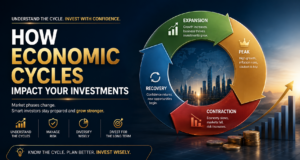
Economic cycles, also known as business cycles, refer to the natural rise and fall of economic activity over time. These cycles generally move through four stages:
- Expansion
- Peak
- Contraction
- Recovery
Each phase affects businesses, consumer spending, interest rates, and investment markets differently.
1. Expansion Phase: Growth and Opportunity
During the expansion phase, the economy grows steadily. Employment increases, businesses perform well, and consumer spending rises. This period usually creates positive sentiment in financial markets.
Impact on Investments:
- Stock markets often perform strongly
- Equity mutual funds may generate higher returns
- Real estate and business investments grow
Investors generally prefer growth-oriented assets during this phase.
2. Peak Phase: Markets Reach High Levels
The peak phase occurs when economic growth reaches its highest point before slowing down. Inflation may rise, and central banks may increase interest rates to control overheating.
Impact on Investments:
- Market volatility may increase
- Some sectors may become overvalued
- Investors often shift towards balanced portfolios
At this stage, diversification becomes important to reduce risk.
3. Contraction Phase: Economic Slowdown
A contraction phase occurs when economic activity slows down. Businesses may face lower profits, unemployment can rise, and consumer spending may decline.
Impact on Investments:
- Stock markets may experience corrections
- Defensive sectors like healthcare and utilities may perform better
- Investors prefer safer assets such as debt funds or fixed income investments
Panic selling during this phase can lead to poor financial decisions. Long-term investors often stay disciplined and continue investing systematically.
4. Recovery Phase: Rebuilding Confidence
The recovery phase begins when the economy starts improving after a slowdown. Consumer confidence gradually returns, businesses recover, and markets begin to stabilize.
Impact on Investments:
- Equity markets often recover before the economy fully improves
- Investors look for long-term opportunities
- SIP investments benefit from lower market valuations during recovery
This phase often rewards patient investors who continue investing consistently.
Why Diversification Matters Across Economic Cycles
Economic cycles affect asset classes differently. That’s why smart investors diversify their portfolios across:
- Equity investments for growth
- Debt investments for stability
- Gold or alternative assets for risk management
A diversified portfolio helps reduce volatility and improves long-term financial stability.
How Investors Can Navigate Economic Cycles
To manage investments effectively during changing economic conditions:
- Focus on long-term financial goals
- Avoid emotional investment decisions
- Invest consistently through SIPs
- Review and rebalance portfolios regularly
Disciplined investing helps investors stay prepared for both market growth and downturns.
Final Thoughts
Understanding
how economic cycles impact your investments can help you make more confident and informed financial decisions. Every economic phase creates both opportunities and risks, but long-term success comes from discipline, diversification, and strategic planning.
With research-driven insights and personalised investment strategies,
ACME Group helps investors navigate changing market conditions and build sustainable long-term wealth with confidence.