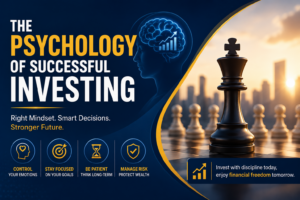
The Psychology of Successful Investing
Successful investing is not only about choosing the right stocks or timing the market — it is also about controlling emotions and making disciplined financial decisions. Understanding the
psychology of successful investing can help investors avoid common mistakes, manage risks better, and achieve long-term wealth creation.
Markets constantly fluctuate, but successful investors focus on strategy, patience, and long-term goals rather than emotional reactions.
Why Investor Psychology Matters
Emotions play a major role in investment decisions. Fear, greed, panic, and overconfidence often influence how investors react during market highs and lows.
Many investors:
- Buy investments during market hype
- Panic sell during market corrections
- Chase short-term profits
- Ignore long-term financial goals
These emotional decisions can negatively impact long-term returns.
At
ACME Group, we believe disciplined investing and emotional control are essential for building sustainable wealth.
1. Fear and Greed Drive Market Behaviour
Two emotions dominate financial markets
fear and greed.
Fear
During market declines, investors often panic and sell
investments at losses because they fear further declines.
Greed
During strong market rallies, investors may invest aggressively without proper research, expecting quick profits.
Successful investors avoid emotional investing and focus on long-term strategies instead of reacting impulsively.
2. Patience Is the Key to Long-Term Wealth Creation
One of the most important principles in investing psychology is patience. Wealth creation takes time, consistency, and discipline.
Long-term investors understand:
- Markets move in cycles
- Short-term volatility is normal
- Compounding works best over time
Instead of chasing instant returns, successful investors stay invested and allow their portfolios to grow steadily.
3. Discipline Helps Investors Stay Consistent
Disciplined investing is one of the biggest factors behind financial success. Investors who follow a structured plan are more likely to achieve their goals.
Disciplined habits include:
- Investing regularly through SIPs
- Diversifying portfolios
- Reviewing investments periodically
- Avoiding emotional decisions
Consistency often delivers better results than trying to time the market.
4. Risk Tolerance Influences Investment Decisions
Every investor has a different comfort level with risk. Understanding your risk tolerance helps create a balanced
investment strategy.
For example:
- Younger investors may prefer growth-oriented equity investments
- Conservative investors may focus more on stability and fixed income assets
At ACME Group, personalised investment strategies are designed according to each client’s financial goals and risk profile.
5. Successful Investors Think Long-Term
Short-term market noise can distract investors from their long-term goals. Successful investors focus on:
- Financial discipline
- Goal-based investing
- Long-term portfolio growth
They understand that temporary market fluctuations are part of the investment journey.
Final Thoughts
The
psychology of successful investing is about staying disciplined, patient, and focused during both market highs and lows. Investors who control emotions and follow a structured financial strategy are more likely to achieve sustainable long-term wealth creation.
With research-driven insights, personalised financial planning, and strategic investment guidance,
ACME Group helps investors make confident decisions and build wealth with clarity and discipline.